
Against the odds: two forest communities in conflict-affected North Kivu approve sustainable management plans
01 agosto 2025
Esta historia es la primera de una serie de cinco partes sobre el impacto de Forests for the Future, que trata sobre cómo los bosques comunitarios en la República Democrática del Congo están permitiendo a las comunidades impulsar su propio desarrollo y proteger los bosques críticos para el clima.
In the heart of the Bapere sector of Lubero Territory, North Kivu, a region often overshadowed by insecurity and conflict, two forest communities are standing strong.
On 14 March 2025, despite an extremely precarious security situation, the local chief of the Bapere sector officially approved the Simple Management Plans (SMPs) for the Batikambema and Asimia Local Community Forest Concessions (CFCLs). These plans, developed with support from RFUK’s Bosques para el futuro project, which was initially funded by USAID, Norad and others, represent a powerful act of resilience and vision, proving that even in the most challenging contexts, communities can lead the way toward sustainable development.
A roadmap for resilience and opportunity
For the communities of Batikambema (4,333 hectares) and Asimia (1,446 hectares), these plans are more than just technical documents. They are roadmaps built by and for the community, tools for restoring local control over forest resources and generating long-term benefits.
Supported by RFUK’s partners, PREPPYG y Red CREF, through the Bosques para el futuro project, both CFCLs began their journeys in 2021 and received their official titles in early 2024. Now, with the SMPs in hand, they are ready to transform their forests into engines of local development.
The plans include detailed economic strategies: Batikambema will focus on the sustainable harvesting of non-timber forest products such as caterpillars and black pepper, alongside agroforestry crops like cacao, peanuts, amaranth, pineapples, bananas, and fish and honey production. Asimia will expand agricultural production (cassava, maize, peanuts, cacao), livestock breeding (notably pigs) and energy wood harvesting. Over five years, the communities expect to generate more than US$30,000 and US$100,000, respectively, funds they aim to reinvest into vital local infrastructure and services.
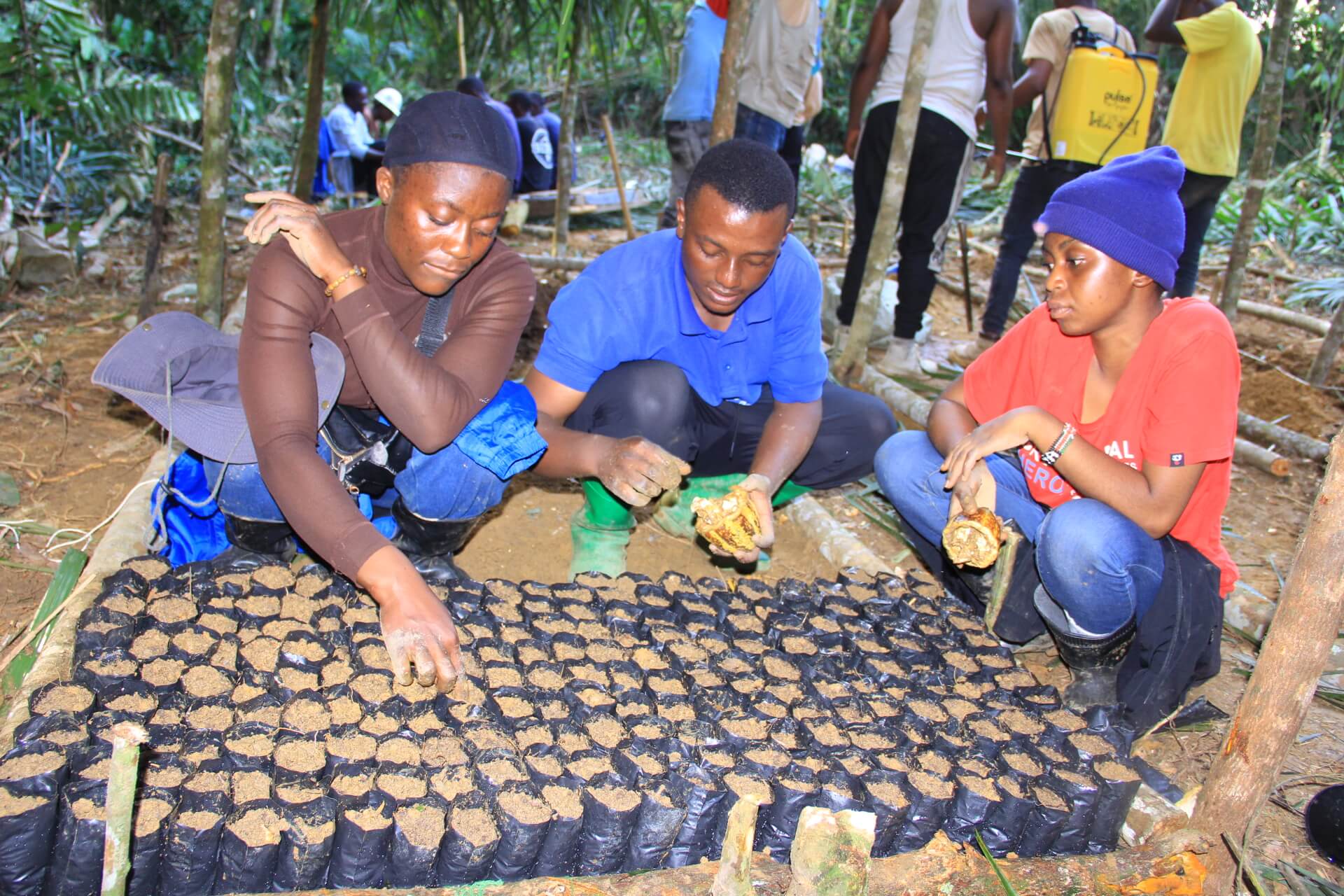
Setting up the Utiyaba nursery facility.
A new social contract rooted in forest governance
"This process has strengthened unity in our community,” said Mr Tanzi Makofi, President of the Asimia CFCL Management Committee. “We now speak the same language and work together toward development. Raising livestock, for example, will help supply the wider sector with meat, an essential need. The training we’ve received has helped us understand the value of our resources and why women must be involved in their management.”
Indeed, inclusion has become a cornerstone of these communities’ new governance models. Ms Naomie Mwamini, also from Asimia, shared how community forestry has transformed women's roles in decision-making. “Before, we weren’t even included in basic discussions about our natural resources. Everything happened at the Barza (men’s meeting place). Now, we are part of the consultations and even benefit from the customary fees that used to be managed exclusively by men.”
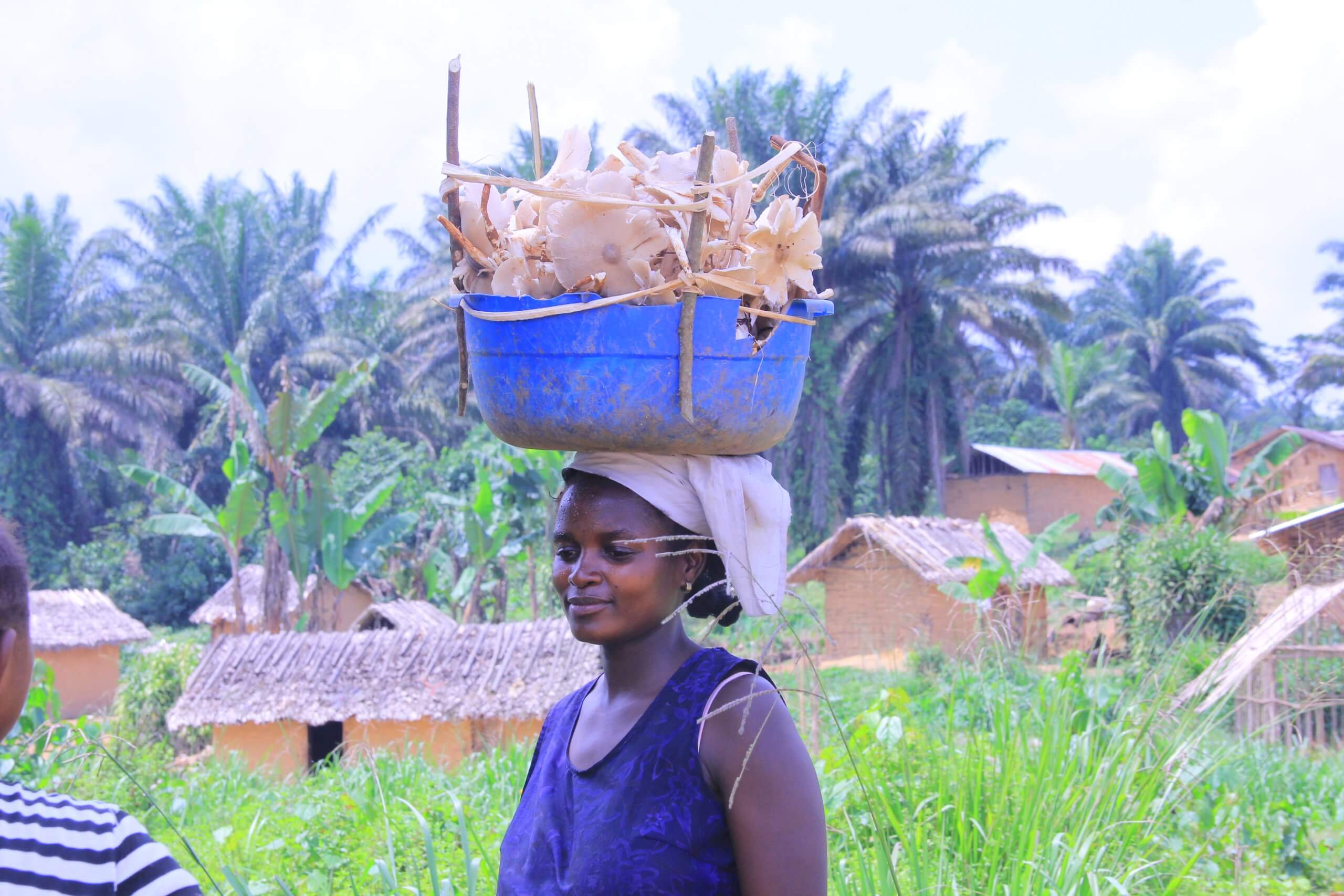
Woman returning with wild mushrooms picked in Bandulu, Bapere district, July 2022.
Local leadership, lasting commitment
Local authorities have welcomed the momentum. “We commend these communities for pushing forward despite the insecurity,” said Kasereka Lwavamba, environmental supervisor for the Bapere sector. “We urge them to remain committed to the activities they’ve planned and to work closely with technical services. We are committed to supporting them as they implement their plans.”
A model for peace and progress
This milestone in North Kivu showcases what’s possible when community determination meets steady partnership. Through Bosques para el futuro, and with support from NORAD, USAID and others, communities like Batikambema and Asimia are rewriting their own futures, creating economic opportunity, strengthening social cohesion and protecting forests for generations to come.
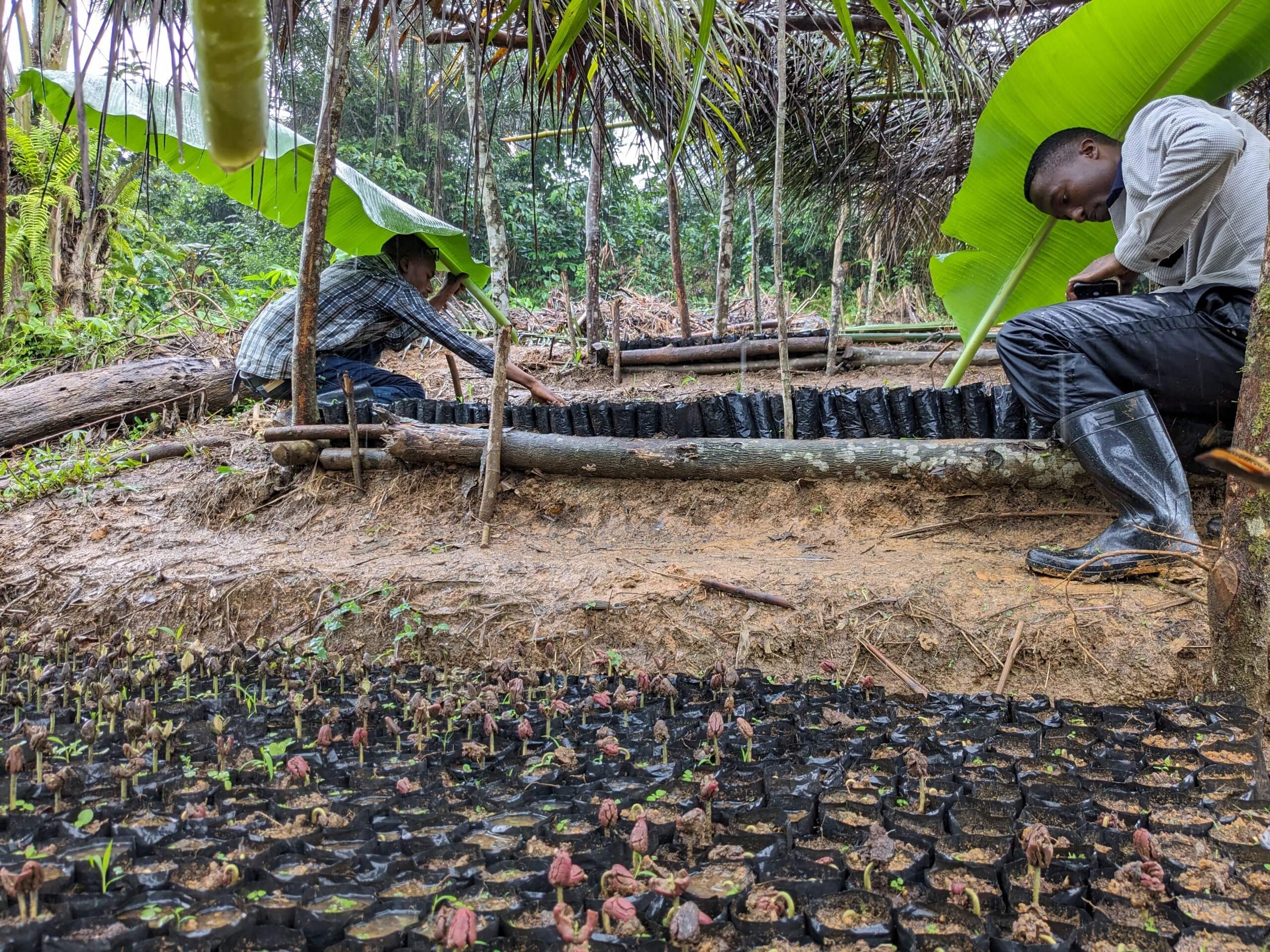
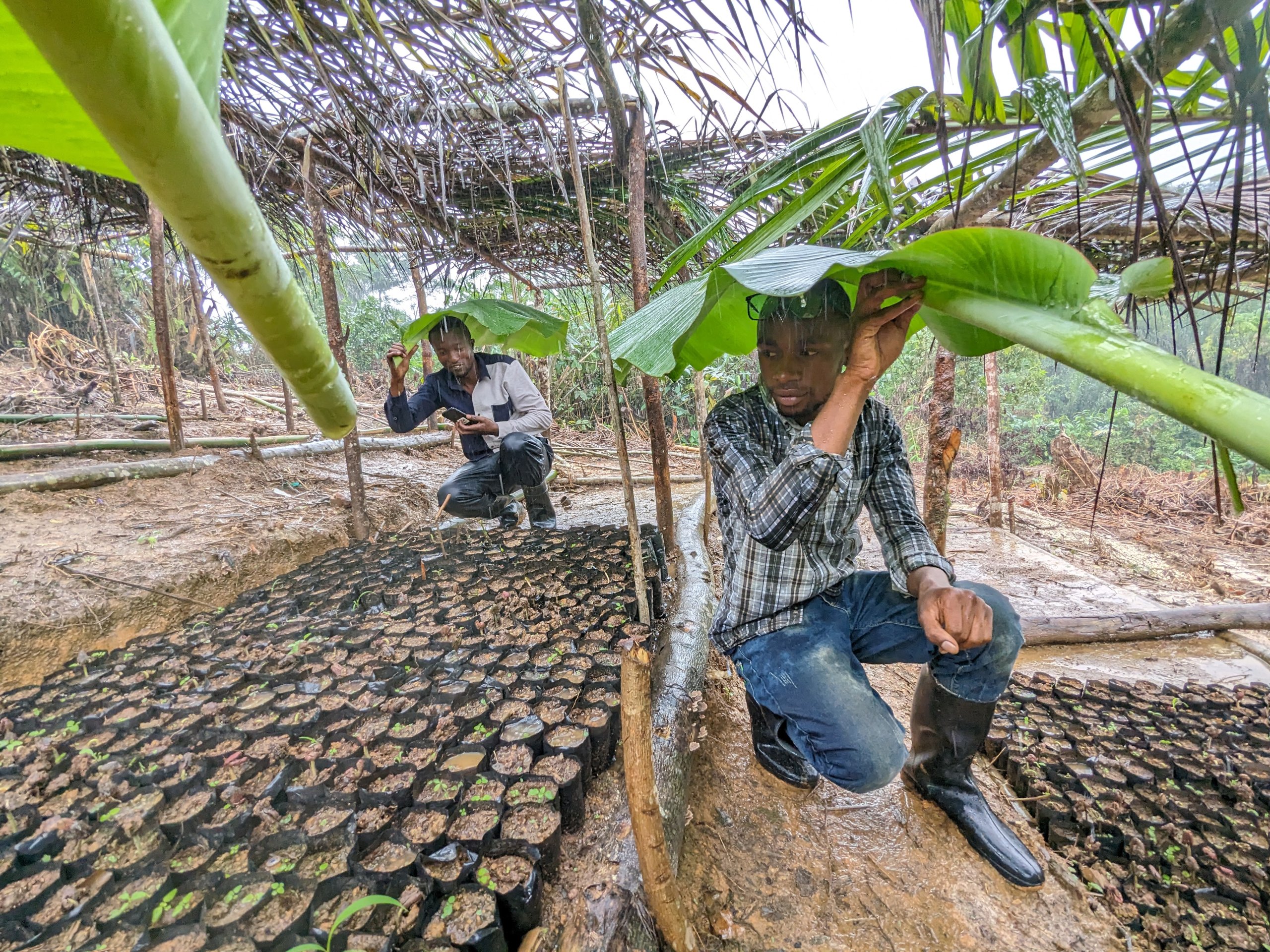
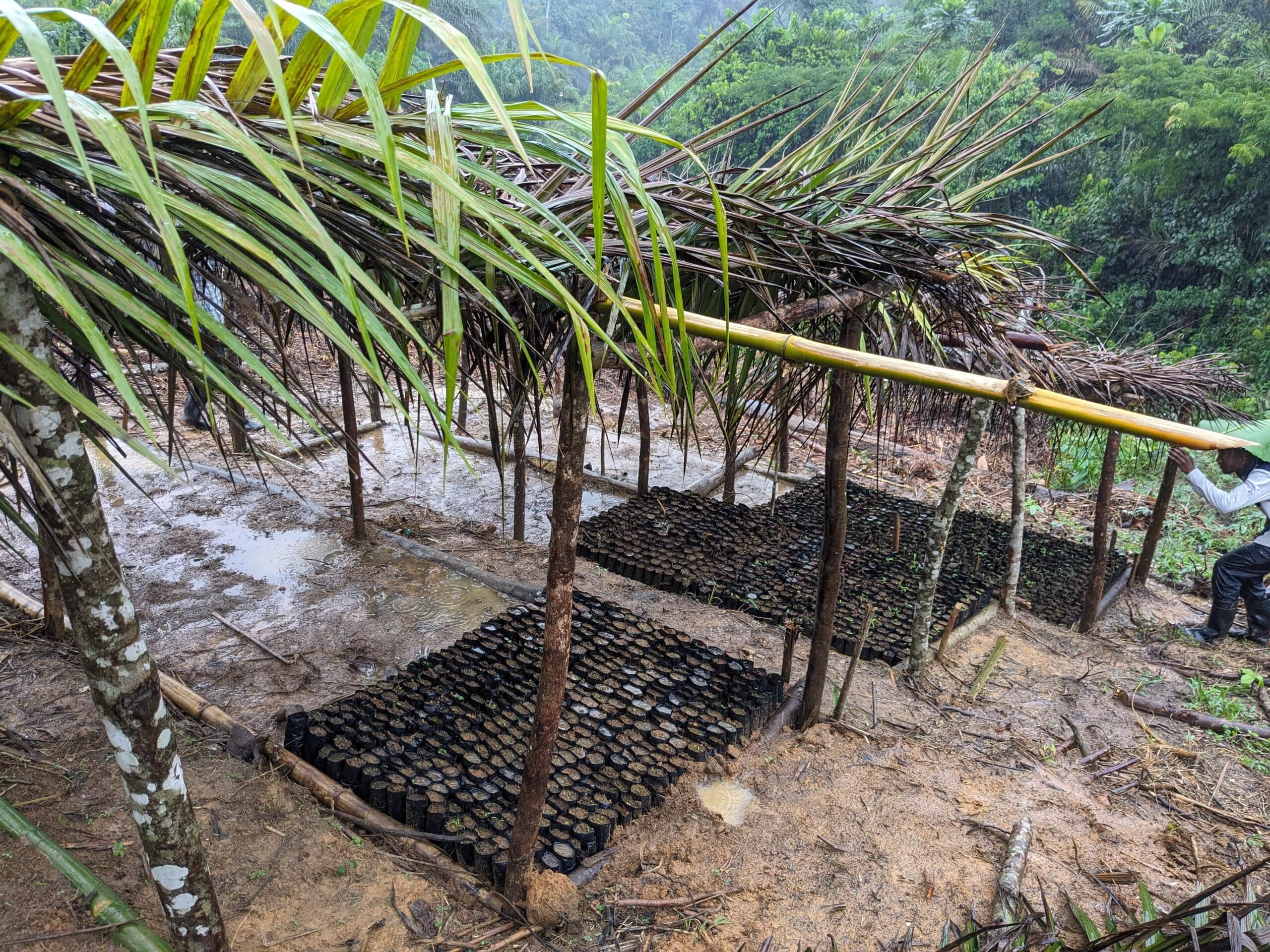
Top two photos) Two agronomists visit the Bamasobha community nursery in Mangazi-Kanimba.
Bottom photo) Bamasobha community nursery in Mangazi-Kanimba two weeks after its creation.
Comparte esto:


