
Community action strengthens forest governance in the Republic of the Congo
29 octubre 2026
Over the past three years, Rainforest Foundation UK (RFUK), together with Comptoir Juridique Junior (CJJ) and ClientEarth, has worked with Indigenous Peoples and local communities in the Republic of the Congo on a project to strengthen forest governance, improve access to justice and support the protection of community rights.
Funded by the Agence Française de Développement (AFD) through its FISONG innovation programme, and co-funded by Earth Insight, the project combined community-based forest monitoring, legal empowerment and advocacy to help communities play a more active role in protecting their forests and defending their rights.
Enabling communities to take action
Many forest communities in the Republic of the Congo live far from administrative centres and judicial services, making it difficult to report illegal activities or seek redress when their rights are violated.
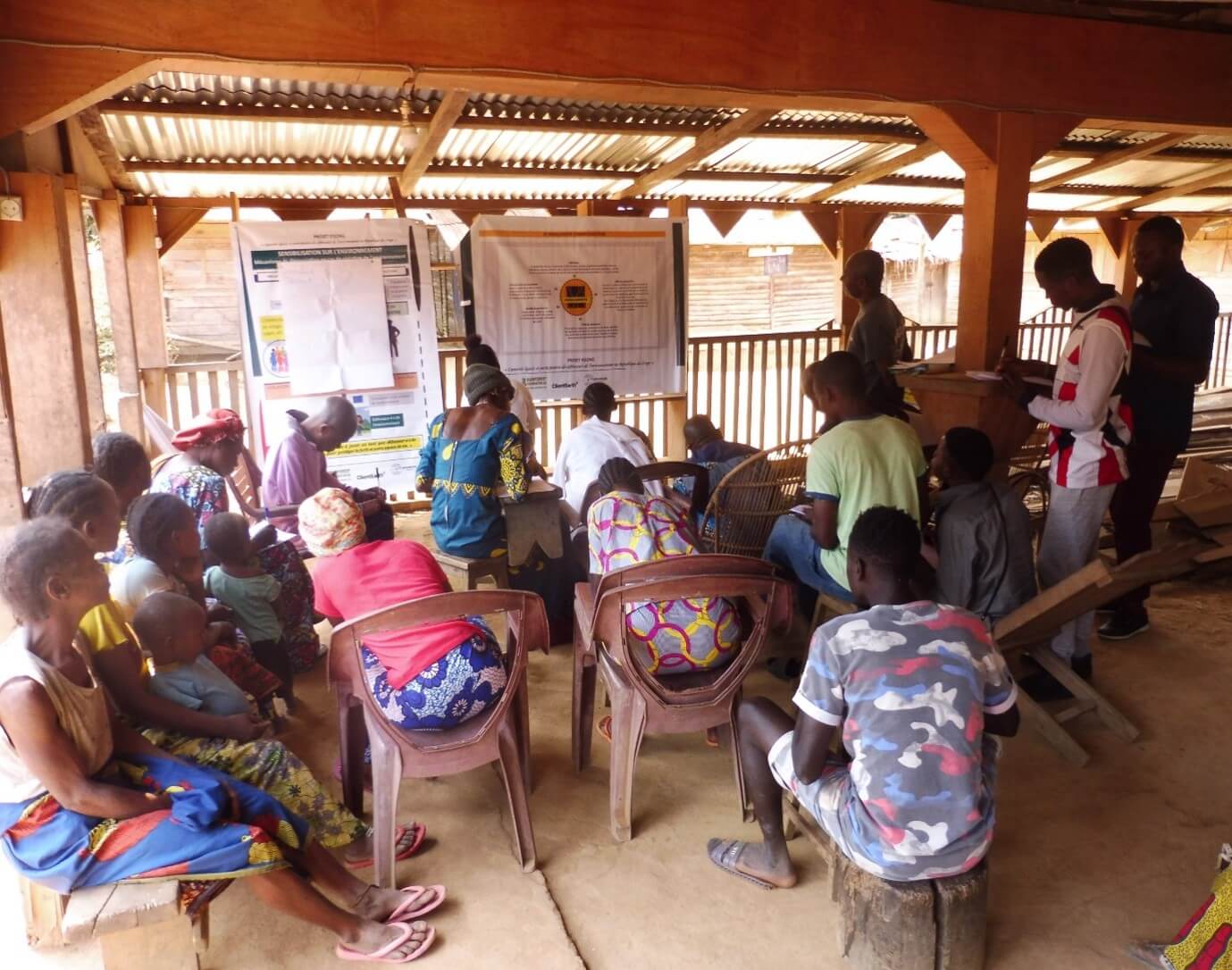
To address these challenges, the project trained communities on ForestLink, RFUK's real-time forest monitoring system, to document illegal activities and rights violations. Community members also received legal training to better understand their rights and the mechanisms available to seek justice.
Across eight villages in the departments of Likouala, Sangha and Lékoumou, 34 community observers were trained to use ForestLink. The project also trained 160 community paralegals, more than half of whom were women, while Indigenous Peoples represented over a third of participants.
For many participants, this was their first opportunity to learn about rights and protections available to them.
"We didn't know there was a benefit-sharing agreement, that we had rights or that we could report these acts", a member of the Ngonaka community explained.
Turning evidence into accountability
As confidence and skills grew, communities began documenting the issues affecting their forests and livelihoods.
During the project, community monitors submitted 55 alerts through ForestLink, reporting illegal activities, governance preocupaciones and rights violations. These reports helped bring greater attention to problems that often go unnoticed in isolated forest areas and provided evidence to support advocacy and engagement with authorities.
The project also helped civil society organisations use this evidence to engage with government institutions and private sector actors, encouraging greater transparency and accountability in the forest sector.
Creating space for dialogue
One of the project's most important achievements was bringing together communities, government representatives and judicial actors to discuss shared challenges.
Following community concerns about increasing human-elephant conflict and crop destruction, the project supported a multi-stakeholder roundtable that developed recommendations for future action, including discussions around compensation for affected communities.
At the national level, project partners contributed to nine legal and policy reform processes related to forest governance. They also played an important role in developing a draft decree on community forest allocation under the Republic of the Congo's 2020 Forest Code - a key piece of legislation that would enable local communities, for the first time in the country, to obtain legal rights to their forests.
Foundations for lasting change
The project demonstrated that when communities have access to the right tools, information and support, they can play a much stronger role in protecting forests and holding decision-makers accountable.
By combining community monitoring, legal support and advocacy, the initiative strengthened local capacity, improved dialogue between stakeholders and helped bridge the gap between legal protections and realities on the ground.
While long-term change will require continued investment and support, the project has laid important foundations for stronger forest governance, greater accountability and increased community participation in decisions affecting the Congo Basin rainforest.
The views expressed in this article are those of RFUK and do not necessarily reflect the official position of AFD.
Comparte esto:


 English
 French
 Spanish