
ForestLink
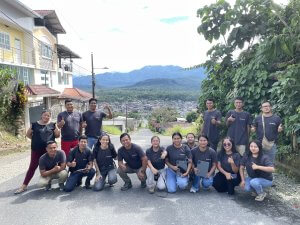
RFUK lanza su primera alianza en Ecuador para ayudar a las comunidades indígenas a proteger los bosques y sus medios de vida
On International Day of the World’s Indigenous Peoples, we are celebrating Indigenous leadership in forest stewardship through our new partnership with Corporación Chakra, an Indigenous-led organisation representing Kichwa communities in the Ecuadorian Amazon, supporting efforts to protect forests, strengthen sustainable livelihoods and safeguard traditional knowledge for future generations. RFUK has taken an exciting step into … Seguir leyendo
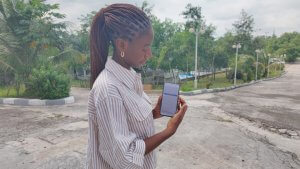
RFUK and partners launch new phase of community forest monitoring in the DRC
RFUK and our partners have officially launched a new phase of community-led forest monitoring in the Democratic Republic of the Congo (DRC), marking the start of an ambitious new three-year programme to strengthen Indigenous Peoples’ and local communities’ ability to protect their forests. The launch took place during a ten-day workshop in Kinshasa, bringing together … Seguir leyendo
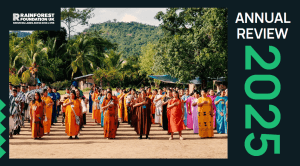
ANNUAL REVIEW 2025
We are delighted to present our 2025 Annual Review, which highlights the key achievements and impact of RFUK’s projects and campaigns over the past year in partnership with Indigenous Peoples and forest communities around the world.
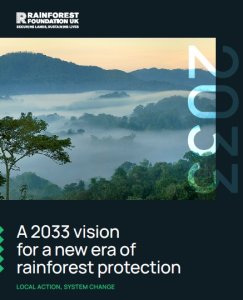
Visión para 2033: hacia una nueva era de protección de las selvas tropicales
RFUK’s 2033 Vision: A New Era of Rainforest Protection sets out our roadmap for the next decade of rainforest conservation. Drawing on more than 30 years of experience working alongside Indigenous Peoples and local communities, the vision outlines how combining community-led action with systemic change, innovative technology and stronger partnerships can drive action at the scale … Seguir leyendo
Haki Ardhi: transforming how women in Kenya claim their land rights
Kakamega County, Kenya – A pioneering initiative is transforming how women in Kenya report and seek justice for their rights and access to land. Haki Ardhi, a monitoring and reporting tool co-developed by Rainforest Foundation UK (RFUK), TMG Think Tank for Sustainability, Shibuye Community Health Workers (SCHW) and the Kenya Land Alliance (KLA), and funded … Seguir leyendo

Conservación liderada por indígenas en Perú: un modelo para proteger la Amazonía
While vast stretches of Peru’s Amazon remain vulnerable to deforestation, illegal mining and land grabs, 821,000 hectares of Indigenous-managed forests stand as a testament to the power of community-led conservation. These territories, safeguarded by the Indigenous organisations FENAMAD and CARE with support from RFUK, are significantly better protected than surrounding areas where illegal activities often … Seguir leyendo

Blog: Haki Ardhi: Las mujeres, la tierra y la justicia climática
How women in Kenya are challenging gender-based land injustices and advocating for a more just and sustainable future. Across Kenya, women are the backbone of rural communities, working the land to feed their families and support local economies. Yet, despite their contributions, they remain locked out of land ownership. Less than 25% of women own … Seguir leyendo

Mapa narrativo: Guardianes de Boca Pariamanu
The Guardians of Boca Pariamanu map story beautifully encapsulates the journey of Indigenous women leaders in Peru’s Madre de Dios region as they navigate the threats to their ancestral lands and livelihoods. This engaging narrative, rich with photos, maps and an accompanying video, focuses on a community’s ongoing struggle to protect their environment while embracing … Seguir leyendo

Guardianes de Boca Pariamanu: El nuevo mapa narrativo de RFUK destaca la resistencia Indígena ante la adversidad
We are excited to announce the publication of our latest map story, Guardians of Boca Pariamanu, which beautifully encapsulates the journey of Indigenous women leaders in Peru’s Madre de Dios region as they navigate the threats to their ancestral lands and livelihoods. This engaging narrative, rich with photos, maps and an accompanying video, focuses on … Seguir leyendo

TENDIENDO PUENTES ENTRE BOSQUES Y MERCADOS MEDIANTE MEDIOS DE VIDA SOSTENIBLES BASADOS EN EL CACAO EN PERÚ
A groundbreaking collaboration with the award-winning Asháninka Kemito Ene cooperative in Peru is enabling Indigenous smallholders to use cutting-edge technology to break down barriers to accessing international markets for their sustainably produced cacao. As global deforestation continues to threaten biodiversity and climate stability, regulatory frameworks such as the EU Deforestation Regulation (EUDR) have emerged to … Seguir leyendo
- 1
- 2
- 3
- ...
- 7
- Siguiente »