
COP30 in Belém: A Mixed Bag for Climate, Forests and People
25 novembre 2025
In the sweltering conference halls of Belém, COP30, dubbed the ‘rainforest COP’, proved to be a mixed bag. While it failed to deliver concrete plans to end deforestation or phase out fossil fuels, there was some better news for Indigenous Peoples, local communities and the Congo Basin. Here are some brief takeaways from a breathless fortnight in the Amazon:
The need for UNFCCC reform: COP30 underlined the urgent need to reform the UNFCCC process. Countries updated climate plans (NDCs) fell woefully short of the ambition needed to keep 1.5°C alive while progress on phasing out fossil fuels was once again blocked by a handful of petrostates, despite overwhelming support from most countries and their populations. Similarly, a much-needed roadmap to halt and reverse deforestation by 2030, oddly linked to the oil phase-out proposal, failed to make it into the final text, although efforts to develop both outside the UN framework are planned for next year.
Article 6 edges closer: After much of the ‘rulebook’ for Article 6 of the Paris Agreement, providing a framework for countries to cooperate on implementing their NDCs, was controversially pushed through at COP29, most discussions at COP30 focused on technical details. However, there was notable pushback on including nature-based offsets in the system, driven by persistent concerns over their integrity and alignment with the 1.5°C goal.
Progress on TFFF but still falling short: The Tropical Forest Finance Facility (TFFF), a flagship initiative by the Brazilian hosts to provide long-term financial incentives for conserving tropical forests, had a prominent profile at COP30. While it incorporated several of our recommendations such as on Indigenous Peoples and investment exclusions, it has so far raised only 30 percent of its USD 25 billion target from sponsors amid some concerns about the financial viability of the investment model.
Bright spots - IPLC pledges and Congo Basin funding: There were notable wins for Indigenous Peoples and local communities including the Forest Tenure Funders Group pledge of USD 1.8 billion to advance IPLC tenure rights - slightly surpassing the COP26 Glasgow pledge – and the Forests and Climate Leaders Partnership (FCLP) commitment to securing 160 million hectares of IPLC lands by 2030. Meanwhile, there was an agreement to triple funding for climate adaptation in the Global South, albeit with a delay of five years, and donors announced USD 2.5 billion for the Congo Basin, signalling growing global attention to this region. As ever with such pledges the real work now begins, ensuring they translate into meaningful change on the ground through secure tenure rights and community-based forest protection and climate adaptation.
DRC gaining prominence: Containing 60% of the only remaining great rainforest still acting as a net carbon sink, the Democratic Republic of Congo (DRC) is gaining increased visibility in international climate negotiations. While the government heavily promoted the « Couloir Vert », initiative, it was the vibrancy of Congolese civil society and Indigenous Peoples’ initiatives that truly struck a chord, particularly through their strong advocacy for a just energy transition et community forestry in the country.

Signing ceremony of the FCLP Intergovernmental Land Tenure Commitment
A Fire at COP - A Stark Reminder: The fire that broke out toward the end of the conference served as a sobering parallel to the growing threats Indigenous Peoples face from climate-induced forest fires in the Amazon. These fires are increasing in frequency and intensity, yet our Peruvian partner CARE is leading the way in addressing them, demonstrating what real, community-driven climate solutions look like.
The human side of COP: Fears that Belém would struggle to accommodate the influx of people proved unfounded. The warmth and hospitality of its residents shone through in countless inspiring events and examples of real climate action across the city. The Peoples’ March on Saturday was also a vibrant, emotional testament to what’s at stake.
For all its flaws, COP30 reminded us why these spaces matter - and why we must keep pushing for a just, inclusive, and ambitious climate future.
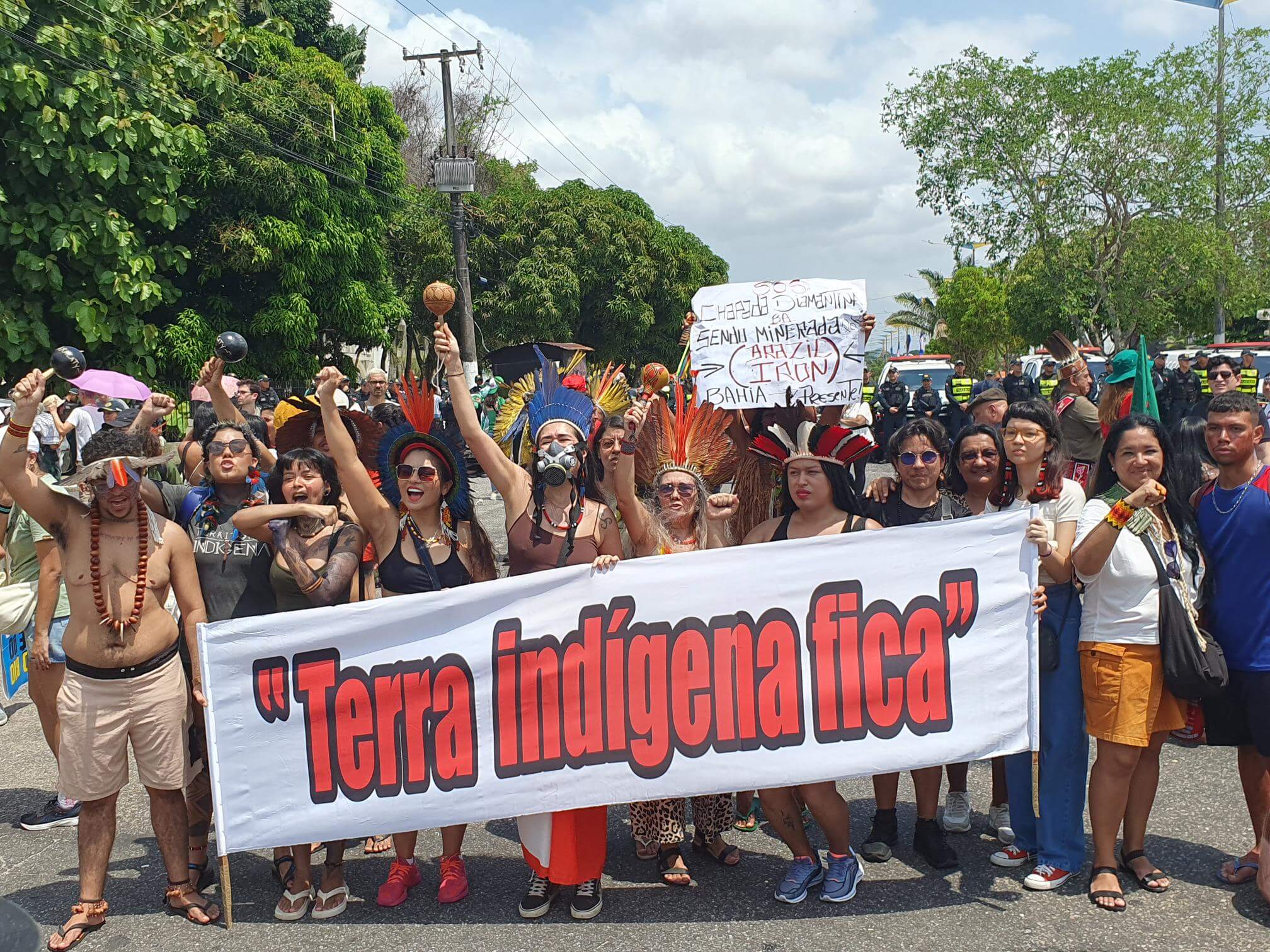
The Peoples March, COP30, Belém
Partagez ceci :

