
How ForestLink and ForestEye are being used to support EUDR compliance in Peru and Ecuador
15 October 2026
In Peru and Ecuador, many Indigenous smallholders are increasingly trying to find ways to provide evidence that their products are compliant with EU Deforestation Regulations (EUDR) coming into force next year. RFUK is working with their organisations to find ways that our software can support small businesses and tropical forest protection.
EUDR
The EUDR is a new policy that intends to reduce the EU’s impact on global deforestation and forest degradation by banning the import or export of products into the EU that are from land that was deforested or degraded since December 31, 2020. The regulations are focused on seven major commodities and their by-products: cattle, wood, cocoa, soy, palm oil, coffee, and rubber.
The regulation came into place in June 2023, although companies do not need to comply until December 30, 2026, for large corporations, and June 30, 2027 for small organisations. For small independent businesses, it can be particularly challenging to provide evidence that their products are EUDR compliant, meaning they could potentially be excluded from markets despite being deforestation-free. The EU chose to acknowledge that smaller businesses may struggle to meet the requirements, therefore giving them a longer period to prepare for the change than larger corporations.
Kemito Ene
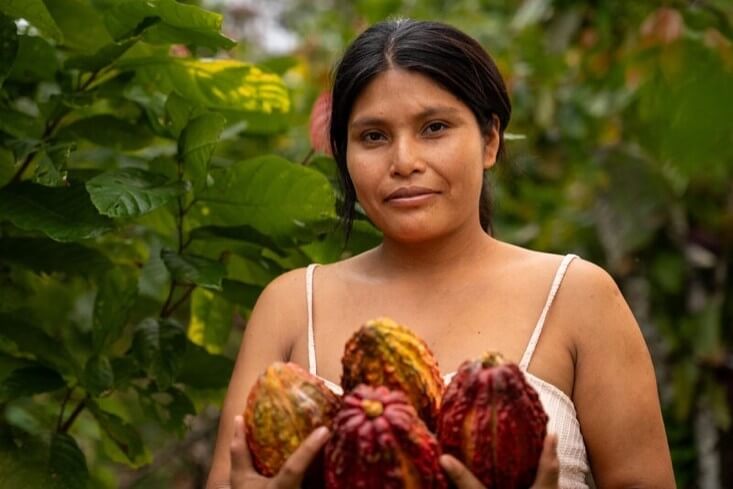
In the Junín Region in Peru, CARE is a self-led Indigenous organisation that works with local Asháninka people in the preservation of their culture, territorial defence and management and on women’s leadership. In 2010, it created Kemito Ene, a cooperative focused on supporting Indigenous economies as alternatives to the coca trade that blights much of the region.
Indigenous businesses specifically can face challenges because they are collectively owned, which can make it more difficult for the community to get banking loans to support any business expansions. Kemito Ene is focused on trying to overcome these issues and help Asháninka families growing cocoa and coffee to become financially sustainable and autonomous, reducing any reliance on external assistance.
Already, our Peru Coordinator Daniela Velit notes that Asháninka businesses are receiving inquiries about whether their products are EUDR compliant. Interested parties will specifically request geolocation data of the plots to be able to check if deforestation has occurred since 2020. The ForestLink and ForestEye software have been valuable tools to prove that the products are deforestation-free.
ForestLink is used to digitalise the productive sites, supported by teams of technical assistants who then go on to create polygons of the plots. ForestEye can then be used to confirm through open-source satellite data that there has been no deforestation. RFUK’s data protection rules also provide another significant benefit as the polygons of productive land are kept private, allowing Kemito Ene to keep the location of cacao and coffee confidential if they want to.

Corporación Chakra
RFUK recently sent a team to work with Corporación Chakra in Napo Province, Ecuador for the first time. Corporación Chakra is an Indigenous-led organisation which represents the Kichwa Indigenous communities stewarding the forests.
It is focused on providing training and support for five Kichwa cooperatives in Napo to enable them to thrive in markets where not many of the businesses are Indigenous. These cooperatives have extremely diverse products, including cacao, coffee, guayusa, vanilla, and banana. They are grown in the Chakra system, a traditional Indigenous method of agroforestry.
RFUK conducted a pilot project this year which focused on supporting the cooperatives of Inti, Ally Guayusa, and Tsatsayaku to digitalise over 250 new polygon representations of the growing sites. ForestLink has been used by Corporación Chakra to provide a centralised database of all the information from the cooperatives, facilitating the management and coordination of resources across them. The digitalised data can also be used to prove EUDR compliance by demonstrating the lack of deforestation on the polygon within the last five years.
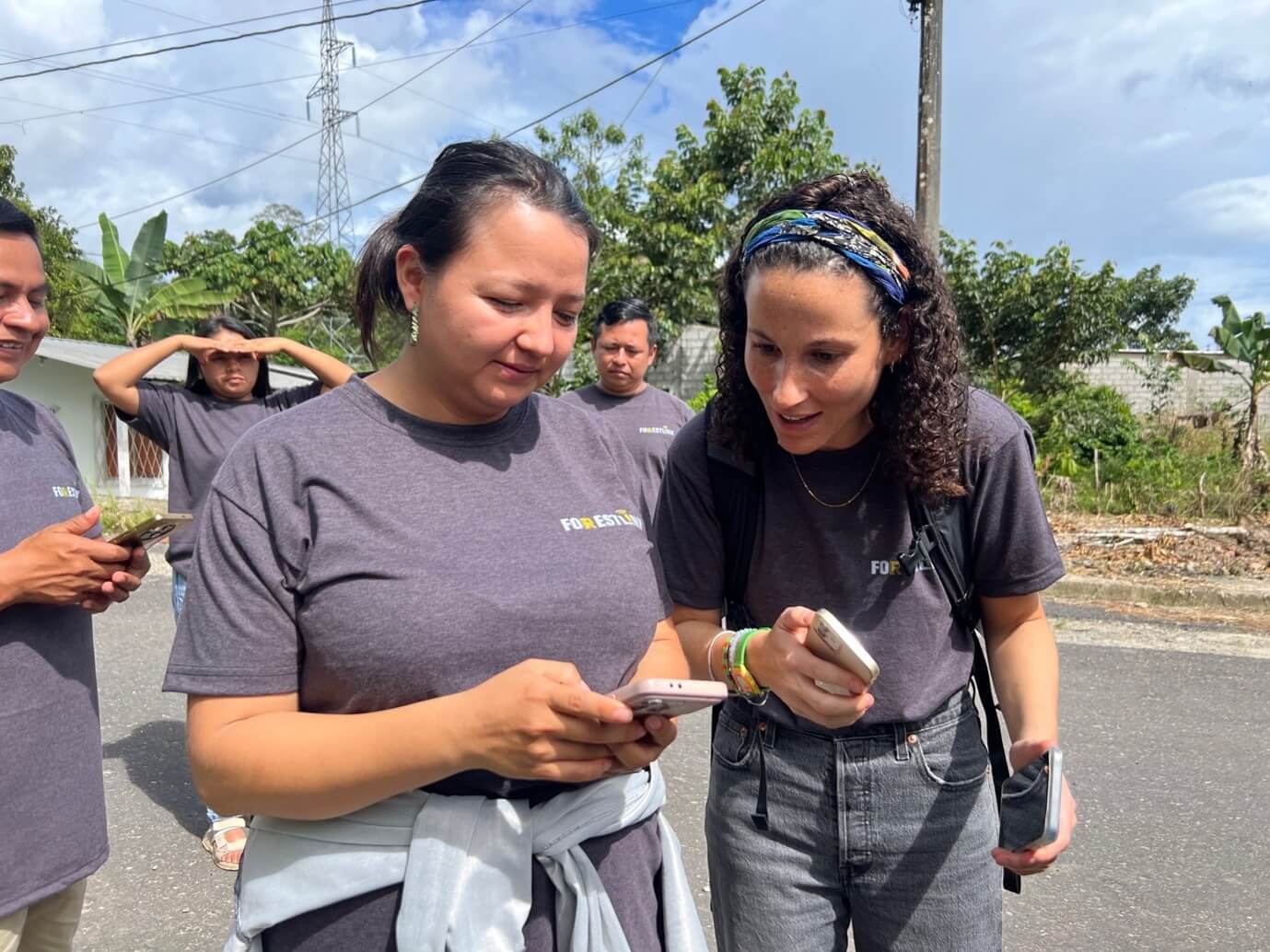
ForestEye enables Corporación Chakra to continue monitoring the land against the threats that they face without external support, most significantly being illegal mining operations and monoculture agriculture expansion.
RFUK aims in the future to continue our collaborations with Indigenous and community organisations in the Amazon and Congo Basins to demonstrate the traceability of their products and defend their forests, especially using the model demonstrated to be successful with Kemito Ene and Corporación Chakra.
Our work is possible, in part, by the support of the Waterloo Foundation and Size of Wales.

Share this:


 English
  French
  Spanish