
2033 Vision: A New Era of Rainforest Protection
18 June 2026
For more than three decades, RFUK has worked alongside Indigenous Peoples and local communities to protect tropical forests. Over this time, it has become increasingly clear that the most effective and equitable way to safeguard rainforests is to support the people who have lived in and cared for them for generations.
This belief is at the heart of RFUK's new 2033 Vision: A New Era of Rainforest Protection, which sets out a roadmap for combining local action with systemic change, strengthening Indigenous and civil society movements, harnessing innovative technologies and building the partnerships needed to tackle the climate and biodiversity crises at scale.
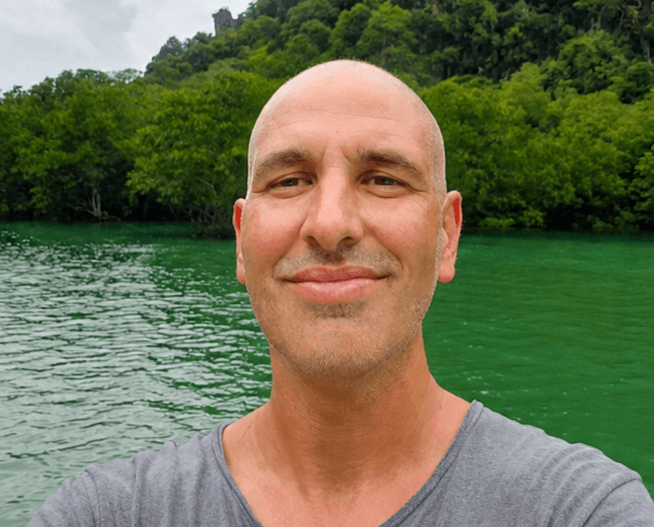
To mark its launch, we spoke with RFUK's Executive Director, Joe Eisen, about the thinking behind the vision and what success could look like by 2033.
Why did RFUK develop a new vision? How has the rainforest protection landscape changed since RFUK was founded?
While there is growing recognition of Indigenous and community stewardship of forests, the principle on which the Rainforest Foundations were founded in 1989, this has not yet translated into practical approaches on the ground that match the scale and urgency of the climate and biodiversity crises. Too often, progress remains confined to conference halls rather than delivering real solutions where they are most needed.
Our new vision aims to bridge this gap and rise to that challenge by developing practical tools and alliances that enable communities to secure, protect and thrive within their forests, while also advancing the broader policy, technological and institutional conditions needed to make this work at scale.
Our vision talks about both local action and system change. How do these two ideas connect and why are both necessary to protect rainforests in the long term?
Change happens at multiple levels. At RFUK, we are privileged to see first-hand the human impact that local initiatives, such as a community forest in the DRC or an Indigenous cooperative in Peru, can have in improving land tenure and livelihoods. However, an overly localised approach risks these becoming isolated success stories if not accompanied by broader change. That is why our vision seeks to place forest communities and grassroots organisations at the centre of decision-making on forests, whether this be through shaping laws and policies or building critical capacities in areas such as mapping and the bioeconomy through our knowledge and skills hubs concept. It is only by connecting local action with system-level change that we can achieve lasting, large-scale impact. Both are essential, and neither can succeed in isolation.
Our vision aims to help build stronger, more self-sustaining Indigenous and civil society movements. To you, what does success look like by 2033?
Our civil society and Indigenous partners are at the heart of what we do, and it is ultimately they who are the agents of change in the geographies we work in. We are very proud that many have been recognised as leading actors in their countries and internationally. We will continue to support them in developing their own organisational visions and in building the capacity to expand their own partnership networks. Together, we recognise that to achieve the outcomes we seek at the necessary speed and scale, we need to go further. That is why we are placing a strong emphasis on working with and mentoring a new generation of Indigenous and civil society leaders, so that we can multiply our impact.
Technology is a major part of RFUK's work, from community mapping to forest monitoring. How do you see this innovation playing out in the next decade of rainforest protection?
The sheer pace of technological development can often feel daunting and disconcerting. However, at RFUK, we have always believed in the power of technology, when placed in the right hands, to support otherwise isolated and remote communities to put themselves on the map, challenge illegal loggers and hold governments and companies accountable. We are excited to be launching the next iteration of our community mapping and monitoring tools, taking this work to the next level. These kinds of tools will enable communities and local partners to have greater control over the collection and use of data to support forest livelihoods and protection, while also allowing this data to strengthen law enforcement and more directly influence forest-related decision-making.
Our vision emphasises partnerships and movement-building. Can you talk to us a bit more about why this collaboration is so important to achieve meaningful change?
Too often, illegal logging and human rights abuses in forests go unreported, impunity for forest crimes remains widespread, and the reality on the ground can feel disconnected from centres of power. Equipping communities with simple, low-cost technology to shine a light on what is happening is a critical part of the solution - but it is not enough on its own. This is why our vision emphasises the need for strong networks of grassroots, national and international organisations to accompany these efforts, supporting communities to access justice, amplify their voices in national and global forums, and ensure decision-making is rooted in local realities.
If someone reads our vision and remembers just one thing, what do you hope it will be?
Change is possible. Our partners, tools and approaches prove this is already happening. We now need to go faster, deeper and further.
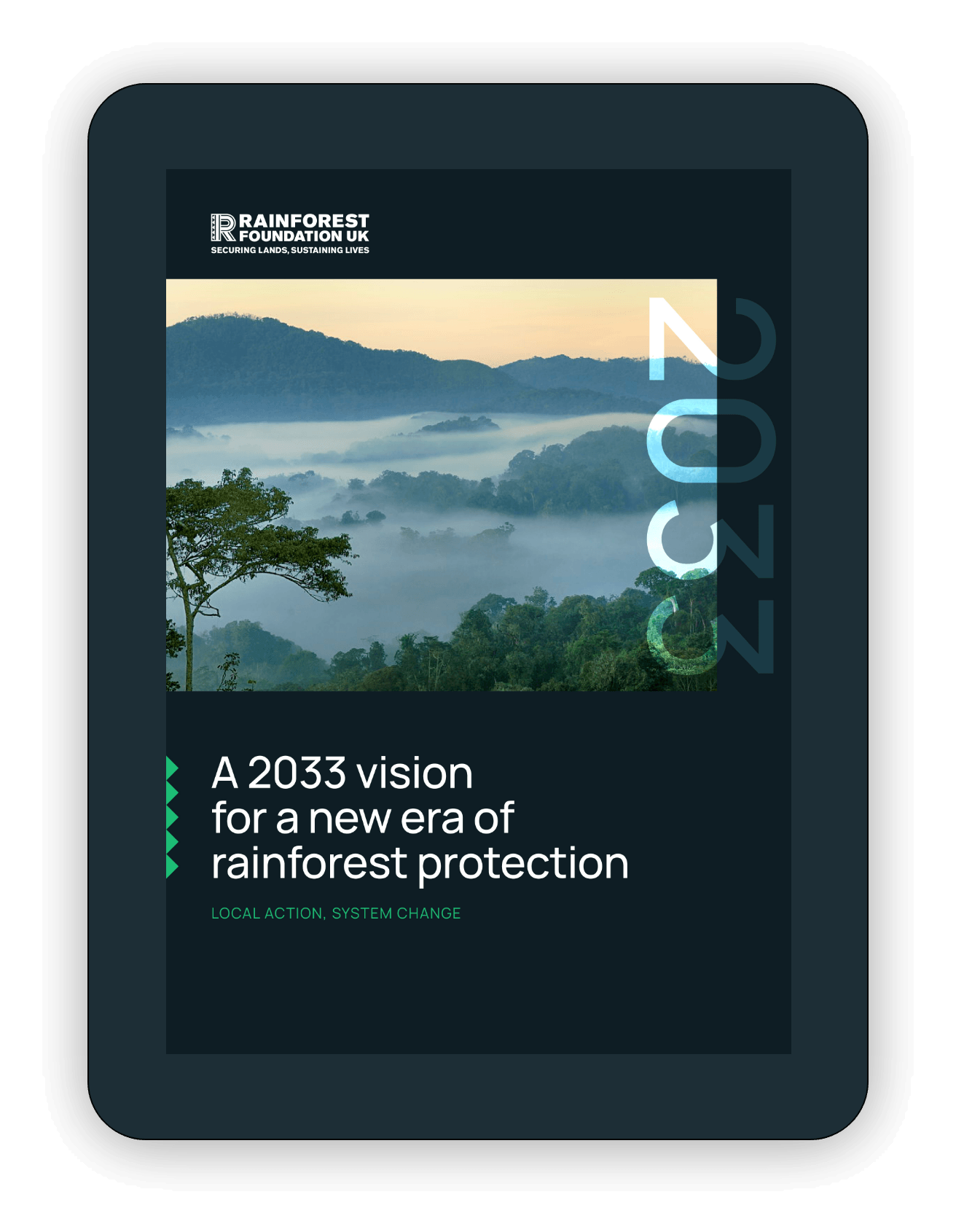
2033 Vision:
A New Era of Rainforest Protection
Share this:


 English
  French
  Spanish