
Investing in local governance: a proven pathway to resilient forest communities in the Congo Basin
20 May 2026
Insights from RFUK’s recent field mission to the Democratic Republic of Congo.
RFUK’s recent field mission to the Democratic Republic of Congo (DRC) reaffirmed a critical lesson for conservation and development partners: strong local governance drives some of the most effective and sustainable outcomes for building resilient forest communities.
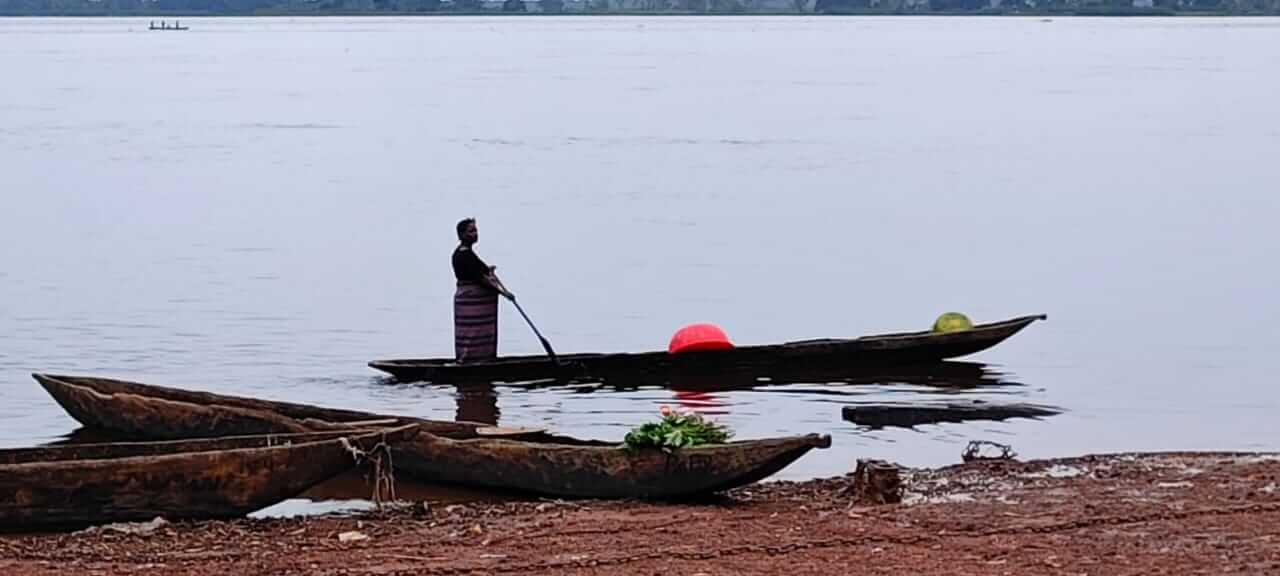
Across Kinshasa and the Equateur province, including Mbandaka, Lukolela and surrounding forest areas, RFUK’s team saw first-hand how community-led governance systems are delivering tangible results for both people and forests.
Sustained impact beyond project lifecycles
Community forestry in the Democratic Republic of Congo (DRC) represents a shift from state-led to community-based management. Based on the DRC 2002 Forest Code and the 2014 Decree, it allows local communities and Indigenous peoples to obtain Local Community Forest Concessions (CFCL). This legal framework grants them the right to manage their ancestral lands and resources in perpetuity.
In multiple Community Forest Concessions (CFCLs), locally elected governance bodies continue to operate effectively after external funding ends.
In Mibenga and Ilinga, community institutions are putting governance into action in ways that directly strengthen both forest protection and local livelihoods. In Ilinga, communities are using RFUK’s ForestLink system to report cases of illegal encroachment as soon as they occur, triggering rapid responses. Working alongside RFUK’s partner GASHE, communities follow up on these alerts by engaging local authorities to halt illegal activities and, where appropriate, ensure sanctions are applied. In one notable case, this process led to an illegal logger being fined 1,500,000 Congolese Francs (approximately £480), showing how community monitoring can translate into real accountability on the ground.
Alongside this protection work, communities are strengthening their financial resilience through Mutuelles de Solidarité or mutual aid groups. These locally run savings and credit systems bring people together around regular contributions into a shared fund, built entirely on trust and collective responsibility. The funds are then carefully managed to respond to the community’s priorities: part is reserved as a safety net for emergencies such as illness or bereavement, part is used to provide low-interest loans that help members start or expand small businesses and part supports the day-to-day running of the group. In Illebo and Ilinga, these mutuelles de solidarité, which were financially and technically supported by RFUK and set by our local partners, have become an important source of stability, enabling members to finance household needs and support a range of community activities. In one example, members have managed to buy household equipment including solar panels, batteries, corrugated aluminium sheets and cookware. The overall Community forest governance structures are also driving investment in essential community infrastructure. Through collective decision-making, communities identify shared priorities and direct their resources toward practical improvements, including storage facilities and livestock initiatives that strengthen food security and income generation.
Across all these activities, regular community meetings ensure that decisions remain inclusive, transparent and grounded in local priorities. Taken together, these examples show how well-supported local governance systems can deliver sustained, community-owned impact and gradually reduce dependence on external assistance.
Scaling impact through community systems
The mission highlighted a clear opportunity to scale impact by building on existing governance structures.
RFUK and our partners are now building on this momentum by developing a regional hub approach that brings clusters of communities together around key value chains such as cocoa, maize, cassava and other locally produced goods. Rooted in existing local governance systems, these hubs create new opportunities for communities to work collectively and strengthen their economic position.
By coming together in this way, communities can pool their production, reach larger and more reliable markets, and improve both the quality and value of what they produce. Organising at this scale also gives them greater leverage as producers, enabling them to negotiate better terms and secure more stable incomes. In doing so, the hubs transform local production into a more coordinated, resilient and market-oriented system, one that builds directly on the strong governance foundations already in place.
By building on established governance frameworks, this model offers a cost-effective pathway to scaling sustainable livelihoods while reinforcing forest protection. As Georges Thierry Handja, RFUK Land and Livelihoods Manager, said, "Our strategy has been to build on existing governance structures rather than bypassing them. This helps create a scalable model where organised producers can access stronger markets while reinforcing the protection of their ancestral lands."
Managing risk through continued investment
The mission also highlighted that governance systems require ongoing strengthening to remain effective and inclusive.
Key risks, such as the concentration of leadership in a few individuals, declining participation and accountability and external interference, including illegal exploitation of resources were identified.
However, through targeted support, such as capacity building, succession planning and transparency mechanisms, these risks can be mitigated to not only protect prior investments but enable future growth.
Looking ahead
In the Congo Basin, one of the world’s most critical carbon sinks, supporting community governance systems is paving the way to long-term forest protection, stronger and more resilient local economies, and increased climate resilience. With increased external support and investment, RFUK is well positioned to scale proven governance models, strengthen accountability and inclusivity, and unlock the full potential of community-led conservation.
RFUK’s recent field mission further confirmed that when communities are given the right support to take the lead in governing their resources, they deliver durable, scalable and cost-effective results for both climate and communities – highlighting how local governance is not just part of the solution, but is in fact the foundation.
Share this:


 English
  French
  Spanish