
From denial to dialogue: CAD’s advocacy is driving change in Ntokou-Pikounda National Park
14 July 2026
In the dense forests of the northern Republic of the Congo, Ntokou-Pikounda National Park stretches across one of the largest remaining blocks of Congo Basin rainforest. It is also home to Indigenous and local communities whose families have lived in these forests for generations.
For years, many of those communities have paid a heavy price for a model of conservation that excluded them. People living around the park reported beatings, intimidation and restrictions on access to the forests, rivers and resources on which their livelihoods depend. But that story began to change on 13 August 2022.
During a Forum for Democracy and the Rule of Law organised by RFUK’s Congolese partner, Centre d’Actions pour le Développement (CAD) – a human rights organisation based in the capital Brazzaville – community members spoke out about abuses linked to the management of the park. Their testimonies prompted CAD, with support from RFUK, to launch an independent investigation to document the allegations.
When CAD published its findings in March 2023, the reaction was immediate. Instead of prompting swift reform, it found itself facing hostility and accusations of foreign interference. Park authorities were distrustful and the political environment grew tense.
CAD did not step back, however. It continued to document allegations independently, maintained dialogue with park officials and the conservation organisation managing the park, the World Wide Fund for Nature (WWF). It pushed for practical solutions rooted in evidence and CAD used legal tools to demand accountability for victims.
Their persistence is now producing results.
In 2024, WWF and the Congolese government commissioned an independent investigation into abuses in and around the park. The report had shortcomings, but it confirmed several of the violations previously documented by CAD. Crucially, it echoed many of CAD’s recommendations, including official recognition of abuses, compensation for affected communities and reforms to improve the park’s internal governance.
For communities who had long felt ignored, this marked an important shift: their experiences could no longer be dismissed.
In the weeks and months that followed CAD kept up the pressure. In September 2025, it carried out a new field mission to assess the measures adopted by WWF park officials, review progress in governance and examine the situation of local and Indigenous populations.
The mission found that important challenges remain. Access to natural resources is still contested in some areas and mechanisms meant to protect community rights remain fragile.
Yet it also found clear signs of movement in the right direction. One of the most significant breakthroughs has been participatory mapping carried out with local and Indigenous communities. Communities have now validated these maps, which are expected to guide the future official delimitation of the park. This matters deeply. For families who rely on the forest for fishing, gathering and cultural practices, mapping customary lands is not just a technical exercise, but a concrete step towards securing rights and reducing conflict.
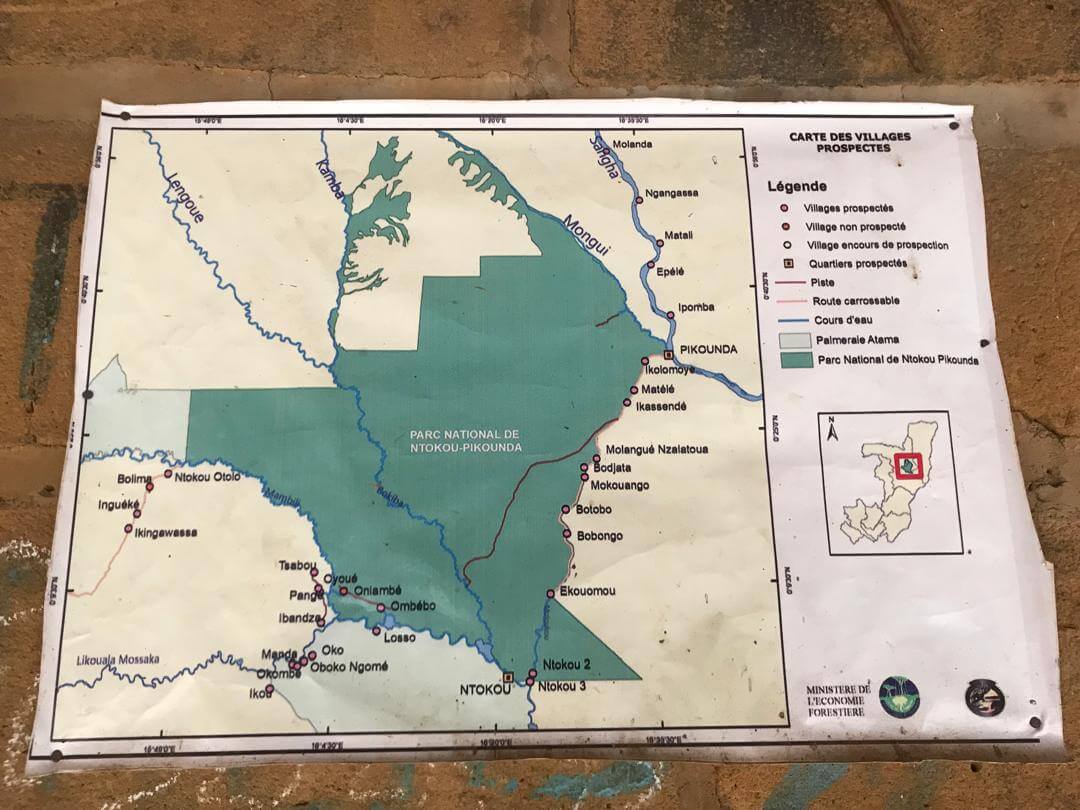
Another important step followed in July 2025, when the park launched the process of developing a management plan with community participation. CAD had repeatedly called for such a plan, arguing that conservation cannot succeed if communities are excluded from decisions that affect their lives.
If properly implemented, the process should help integrate community representatives into governance bodies and build stronger safeguards for their rights.
CAD’s legal advocacy has also helped drive change. The organisation continues to press forward with legal proceedings against WWF and the park so that documented abuses receive a proper judicial response and victims can access justice.
That pressure has already contributed to practical reforms. Park eco-guards have now received human rights training aimed at reducing the risk of future abuses.
These changes do not erase the harm that communities have suffered, nor do they resolve every problem in Ntokou-Pikounda. They do, however, tell an important story. In a highly sensitive context, the dynamic has started to shift from denial and mistrust towards recognition, dialogue and gradual reform.
The experience of Ntokou-Pikounda shows that when documentation is credible, advocacy is persistent and legal tools are used strategically, change is possible. It also underlines a wider lesson for conservation across the Congo Basin and beyond: protecting forests cannot come at the expense of the people who have protected them for generations.
A human rights-based approach is not an obstacle to conservation; it is the only way to make it last.
Share this:


 English
  French
  Spanish