
DR Congo

44 Congolese and international NGOs join call to stop lifting of the DRC logging moratorium
The DRC government has announced imminent plans to lift a near 20-year ban on new logging concessions operations in its Congo Basin rainforest – one of the last intact rainforests in the world. With less than six weeks to go before the crucial climate negotiations at COP26, Environmental and Human Rights NGOs are calling on … Read more

Community finally receives official documents to manage their traditional lands
This Thursday, September 2, the Bamasobha community of Lubero (North- Kivu), comprised of indigenous and Bantu groups, was officially handed the decree legally recognising their hard-won CFCL (local communities’ forest concession). This decree guarantees perpetual rights over Bamasobha’s customary lands, and thus opens the way to the management stage of the CFCL, an area rich … Read more

Press Release: NGOs warn about lifting DRC logging ban
FOR IMMEDIATE RELEASE: LOOMING CLIMATE CATASTROPHE IF INTERNATIONAL COMMUNITY STAYS SILENT ON PLAN TO OPEN UP THE WORLD’S SECOND-LARGEST RAINFOREST TO INDUSTRIAL LOGGING, WARN NGOS In a letter to international climate funders, a group of leading environmental and human rights organisations warn of an impending climate and biodiversity catastrophe following a plan to lift a … Read more

Lifting DRC’s logging moratorium would be a disaster, warn NGOs
13 July 2021, Kinshasa – Greenpeace Africa, the Rainforest Foundation UK and the Rainforest Foundation Norway are alarmed over a plan announced by the Democratic Republic of Congo (DRC) Environment Minister Eve Bazaiba to lift a ban on new industrial logging concessions in the world’s second largest tropical forest. The national moratorium, which has stood since 2002 … Read more

Just launched: “Forests for the Future” a 5-year community forestry project in DRC
With the support of USAID and Norad, the Rainforest Foundation UK and a consortium of Congolese organisations are launching “Forests for the Future,” a 5-year project supporting community forests and sustainable livelihoods in DRC. Kinshasa, July 7, 2021 – Senior representatives of the government (from the Ministry of Environment and Sustainable Development), the United States … Read more

Use It AND Lose It – Industrial Logging and its Role in Deforestation in the Democratic Republic of Congo
New research demonstrates a clear link between the establishment of commercial logging operations and a cascade of deforestation. Investigating forest loss in DRC across 60 logging concessions and eight ‘control’ areas, the findings from this study show that the selective logging of high-value timber species is not a sustainable form of forest management, but rather … Read more
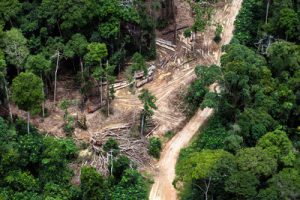
New RFUK Research Shows Link Between ‘Sustainable Forest Management’ and Deforestation in DRC
A new study published by RFUK establishes a clear link between selective logging and deforestation in the world’s second largest tropical forest. Despite being synonymous with high-level corruption, illegal practices and poor relations with local communities, selective logging of timber from tropical rainforests has long been promoted in the Congo Basin as a form of … Read more

Civil Society in the Congo Basin Sets Out Vision for Climate Change Mitigation and Adaption
Civil society organisations in the Democratic Republic of Congo (DRC) and the Republic of Congo (RoC) are calling for much greater inclusion of forest communities and forest governance reforms in their governments’ plans to address the climate crisis. In the run up to this year’s crucial climate summit in Glasgow this November, countries around the … Read more

The Bamasobha community gains legal rights over their forest in North-Kivu, Democratic Republic of Congo
Women in Bamasobha participating in discussions which led their community to apply for a community forest. When the villages of the Bamasobha community sought legal recognition of their traditional forests, a village chief, M. Sweli Maliani, declared: “We asked for a Community Forest because this is how we can secure our land, and prevent poachers … Read more

Final Evaluation: Embedding Community Real Time Monitoring (RTM) to Sustain Livelihoods and Forests in West and Central Africa
An external evaluation of the ‘Embedding community Real Time Monitoring (RTM) to sustain livelihoods and forests in West and Central Africa’ project took place between October 2020 and January 2021. This project, funded by the UK government, seeks to improve forest governance in Cameroon, Ghana, DRC and Republic of Congo by strengthening of forest communities’ … Read more