

Population

Country size

Forest cover
overview
Peru sits in the Andean Amazon, an area of exceptional biodiversity and cultural richness. The country is home to around five million Indigenous people representing 55 distinct ethnicities speaking 48 languages. Roughly a quarter of the Peruvian Amazon is titled to Indigenous communities and at least 20 of these peoples continue to live in voluntary isolation.
The leading causes of forest conversion and fragmentation are commercial agriculture, cattle ranching, illegal logging, mining and drug production while an increasing road network is opening up previously remote forest areas. Around a third of the Peruvian Amazon is covered in oil and gas concessions – this includes concessions allocated over titled land and protected areas.
But despite these challenges, there are many reasons for hope. The Indigenous movement in Peru is strong and well organised and has a track-record of fearless activism. Indigenous forest monitoring also has a long tradition in the country and has succeeded in denouncing illegal activities, tackling forest destruction and defending rights. The rich forests here provide a myriad of livelihood opportunities, which with the right support, could reduce poverty in a sustainable, climate-smart way.
Our Impacts
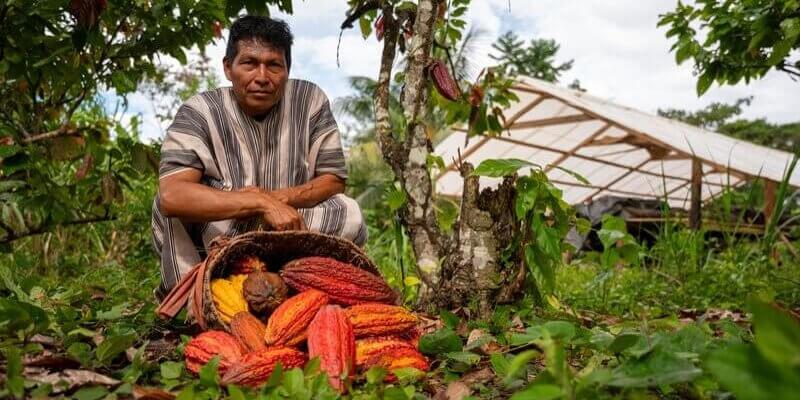
- Having supported the Asháninka to secure legal title to their lands in the Ene River Valley, we work alongside the representative indigenous organisation CARE to pioneer sustainable livelihoods in the region. The producers' association Kemito Ene was awarded the prestigious with the UN Equator Prize in 2019 for it work increasing forest-friendly cacao yields and boosting the incomes of hundreds of families.
- We supported Asháninka people and CARE in a powerful campaign against the Pakitzapango dam and other planned infrastructure that would have destroyed tens of thousands of hectares of rainforest and uprooted indigenous communities.
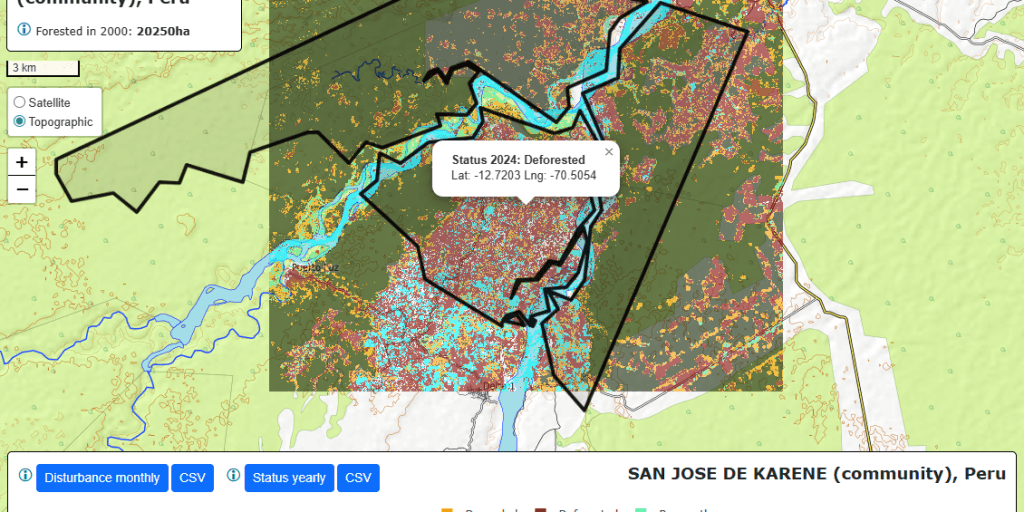
- With the indigenous organisation FENAMAD, our ForestLink system is being used by indigenous peoples in the country's biodiverse Madre de Dios region to defend their territories from illegal logging and mining. This has reduced deforestation rates, led to landmark court cases and greater awareness of the threats faced by environmental and human rights defenders.

Projects & Campaigns

ForestLink
Real-time community-based monitoring is a tool that connects local people with national law enforcement in an effort to stop illegal logging and deforestation.
Indigenous Land & Livelihoods
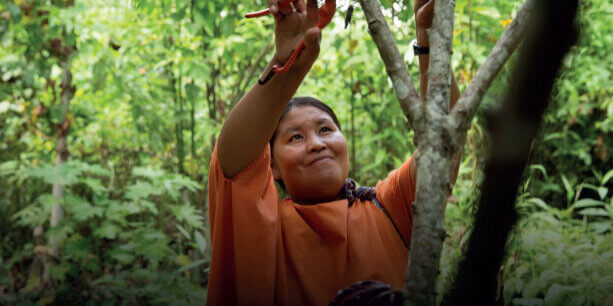
This project helps indigenous Asháninka families in the Peruvian Amazon to generate sustainable income through the production of environmentally-friendly crops like cocoa.
Latest news

Latest publications
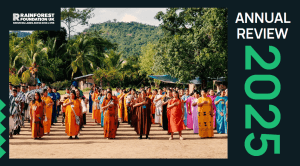
ANNUAL REVIEW 2025

Map story: Guardians of Boca Pariamanu

ANNUAL REVIEW 2023



 English
  French
  Spanish