
French
Forestlink: Unlocking the potential of forest guardians and environmental defenders in tackling illegal logging in DRC
With support from the UK Department for International Development (DfID), the Rainforest Foundation UK (RFUK) has been successfully developing and testing a ground-breaking new end-to-end system that is unlocking the potential of traditional forest guardians in monitoring and protecting their forests. ForestLink enables communities anywhere in the world to capture and transmit highly accurate reports … Read more

Report charts way to better inclusion of forest communities in Congo Basin land use planning processes
The rainforests of the Congo Basin are among the earth’s great carbon and biodiversity reserves. They are also believed to have been inhabited by humans for 50,000 years and today directly sustain the lives of an estimated 50 million people who are among the poorest people on the planet. As these forests come under increasing … Read more
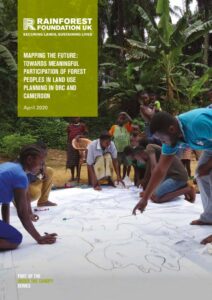
Mapping the Future: Towards Meaningful Participation of Forest Peoples in Land-use Planning in DRC and Cameroon
This RFUK report charts way to better inclusion of forest communities in Congo Basin land use planning processes.

Securing Customary Rights is Key to Sustainable Community Forestry
The laws in the Republic of Congo and the Central African Republic provide limited protection to indigenous peoples and local communities regarding access to land and forest resources. Often, logging concessions overlap their territories, restricting access to lands and resources. However, the development of community forests is gaining momentum in the region. These can help … Read more
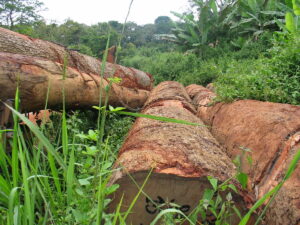
Investigation finds illegal tropical timber from the Democratic Republic of Congo may be finding its way into European markets
A report by a French news agency [1] has exposed an industrial-scale illegal logging operation linked to high-level corruption in the Democratic Republic of Congo (DRC) following an investigation by the Rainforest Foundation UK’s (RFUK’s) partners’ and other NGOs The journalists, led by Jerome Garro, from TF1, found that ‘Long Xin’ (formerly known as ‘Maniema … Read more
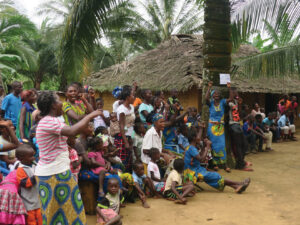
Community Forests change lives: How a Congolese community won rights to their forest
Ilinga received its official community forest title in September 2018 In September 2018, the community of Ilinga received its official community forest title. The community, whose traditional name means “Unity”, is one of eight in Equateur province in the Democratic Republic of Congo (DRC), supported by local NGO GASHE[1], as part of Rainforest Foundation UK’s DFID-funded … Read more
DRC government suspends logging company after civil society reports illegal rainforest logging
A major illegal logging operation [1] has been halted by the Democratic Republic of Congo’s (DRC’s) government following monitoring by local non-governmental organisations and multiple complaints by forest communities. The DRC environment minister, last Friday (29th November), instructed the governor of the Tshopo Province to suspend the logging permit of the Chinese-owned FODECO [1] in … Read more
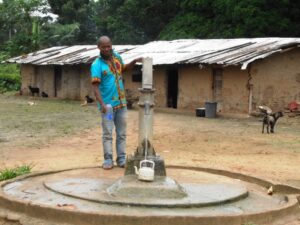
The realisation of social development projects by logging companies in forest communities: a reality or a utopia?
Article provided by Eco-Dev – RFUK’s local partner in Cameroon A drilling pump in Metsing Village, Cameroon © EcoDev 2019 Rainforests are among the richest ecosystems in the world and have a vital importance for the populations who live within them. They are home to approximately 30 million people and provide livelihood subsistence to a … Read more

Women’s Participation in Community Forestry in the DRC
Based on a literature review and field research with communities in Equateur province, this study provides an overview of gender inequalities in the context of community forestry in the Democratic Republic of Congo. It also puts forward recommendations for improving women’s participation in community forestry activities.
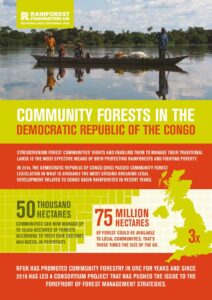
Community Forests in the Democratic Republic of the Congo
Strengthening forest communities’ rights and enabling them to manage their traditional lands is the most effective means of both protecting rainforests and fighting poverty. In 2014, the Democratic Republic of Congo (DRC) passed Community Forest legislation in what is arguably the most ground-breaking legal development related to Congo Basin rainforests in recent years.
 English
  French
  Spanish